


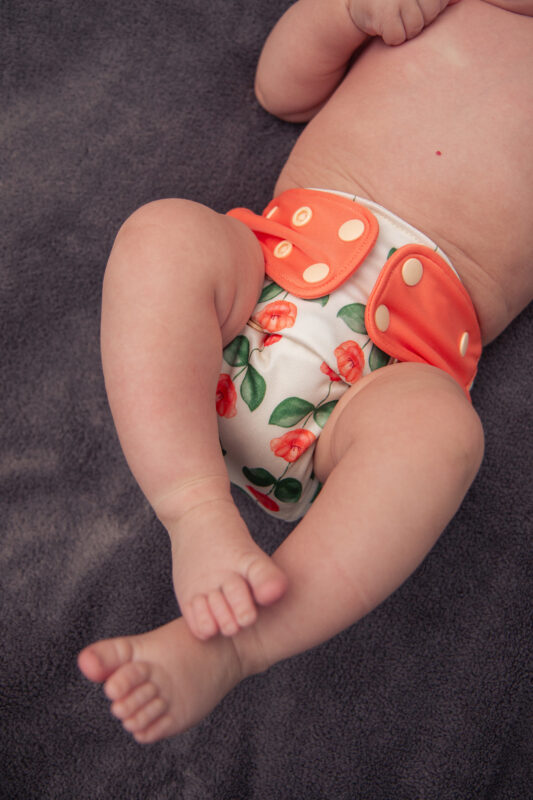
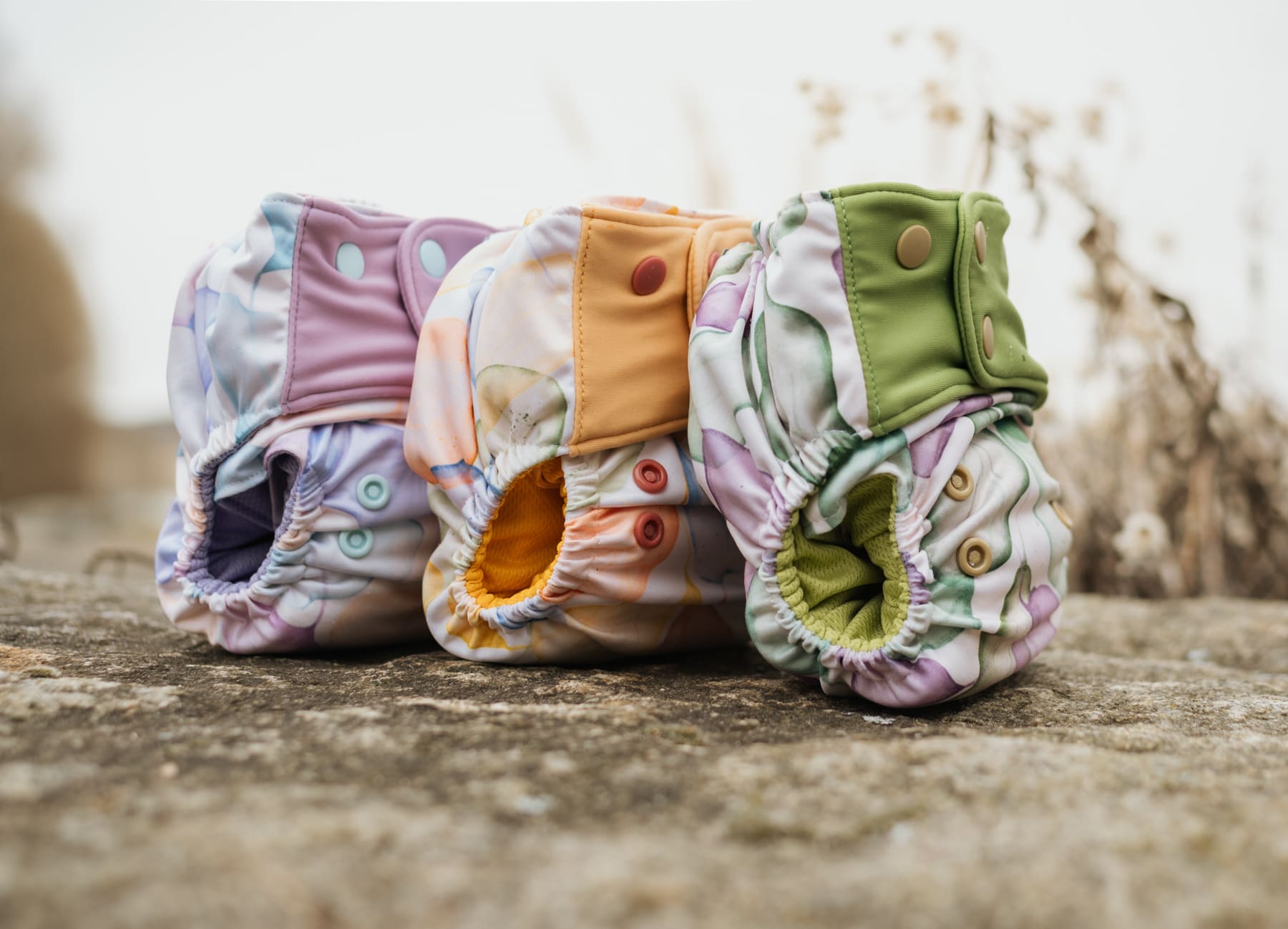

What I wish I knew before starting with cloth nappies!

For me, the idea of using cloth nappies for my child has always been there. My parents used them for me when I was little, and it's just always been around, so to speak. But then, when I was actually pregnant and started to think about cloth nappies, it felt like there were many questions that needed clearing up. Would it be complicated? Could the smell be a problem? Would it mean I'd have to do laundry all the time? HOW did you wash them? And what about the poo?
I'm helping you move forward by compiling – things I wish I’d known before starting with cloth nappies:
It's not as complicated as it sounds
I think many people, just like me, see cloth nappies as something complicated. The different systems, insert, materials and washing routines can feel overwhelming. Absolutely, there’s loads of information to read through and sort through.
But in practice, it boils down to three things;
use
Store
wash
My mission with Green Poppy was also to make it easy for you to start using cloth nappies. On the website here, there are lots of Guide to read, on YouTube finns Green Poppys tygblöjeskola and on Instagram There are quick, easy clips. Once you've gone through the guides, these three parts will become clear and it's, in fact, not as complicated as it sounds.
You don't need to buy everything at once
At first, I thought I needed to have a perfect set immediately. All the varieties. All the accessories.
I did not need to.
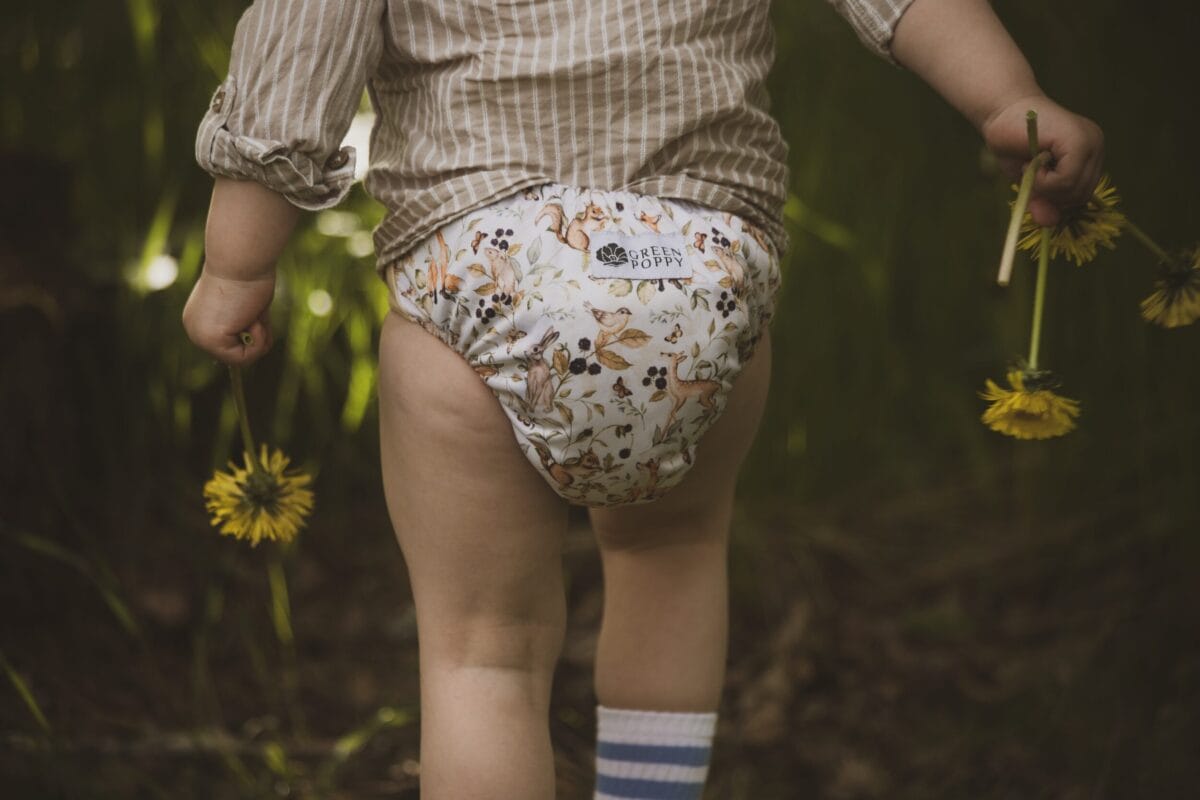
It's perfectly fine to start small. Try a few nappies. See how you get on. Learn what works for your child and your everyday life. Cloth nappies aren't an all-or-nothing decision. It's of course perfectly alright to mix them with disposable nappies in the beginning.
If you use one cloth nappy every day for a year, you will have saved 365 disposable nappies.
3. It doesn't smell if you wash correctly
I know this is something many people worry about, that nappies will smell bad. But when you have a good washing routine and use the right amount of detergent, the nappies become clean. Full stop.
Odour usually arises when too little water is used, programs are too short or the wrong detergent is used. Or perhaps too much detergent. Not because cloth nappies are unhygienic in themselves.
It's easier than you might think to handle poo
Yes, we need to talk about it. The poo question.
Before a baby starts on solids, it's actually very simple. Breast milk poo and formula poo are water-soluble, which means they dissolve in water, and therefore in the washing machine.
And when it's time for slightly firmer poo, well, there are convenient solutions that make it much less dramatic than one might initially imagine.
It's a mental threshold more than a practical one.
5. It feels good on a deeper level
This is perhaps the most important thing.
I thought cloth nappies were just about the environment. But for me, it also became a feeling of control and closeness. To know what's closest to my child's skin. To actually be able to avoid strong scents and unnecessary additives. As well as reducing waste in our home.
It gave a feeling of actively choosing something other than a throwaway culture.
6. It doesn't have to be perfect
It took a while before I understood there isn't one “right” way of doing this. Some use cloth nappies full-time. Others part-time. Some combine.
Every little helps.
If I could say anything to myself at the start, it would have been
– start simple
trust that you are learning
– and do it your way
Cloth nappies are not an achievement. They are a choice. And they can be both soft and flexible.
